Efficient, reliable waterway cleaning that keeps systems flowing and communities protected. TDG Environmental removes sediment, debris, and vegetation with precision—minimising disruption while restoring capacity, reducing flood risk, and safeguarding the environment.
Sediment Accumulation and Capacity Loss
Sedimentation reduces waterway flow capacity, increasing flood risk during heavy rainfall events. Accumulated silt and debris can block culverts, compromise treatment plant efficiency, and damage downstream infrastructure. Regular maintenance prevents costly emergency interventions and infrastructure damage.
Vegetation Overgrowth and Access Limitations
Uncontrolled vegetation restricts water flow, destabilises banks, and blocks access for inspection and maintenance. Dense growth on steep slopes and in confined spaces creates significant safety hazards for traditional maintenance approaches. Overgrown waterways also harbour pests and reduce water quality.
Hard-to-Reach Locations and Safety Concerns
Steep terrain, deep water, confined culverts, and environmentally sensitive areas make conventional excavation impractical or impossible. Manual cleaning methods expose workers to hazardous conditions including confined spaces, unstable ground, and water-borne contaminants. Safe, efficient access solutions are essential for comprehensive waterway maintenance.
Our team conducts comprehensive site assessments to identify sediment levels, vegetation density, access points, and environmental sensitivities. We develop tailored cleaning strategies that minimise environmental impact while maximising efficiency. Pre-work surveys utilise GPS mapping and CCTV inspection to document existing conditions and inform our approach.
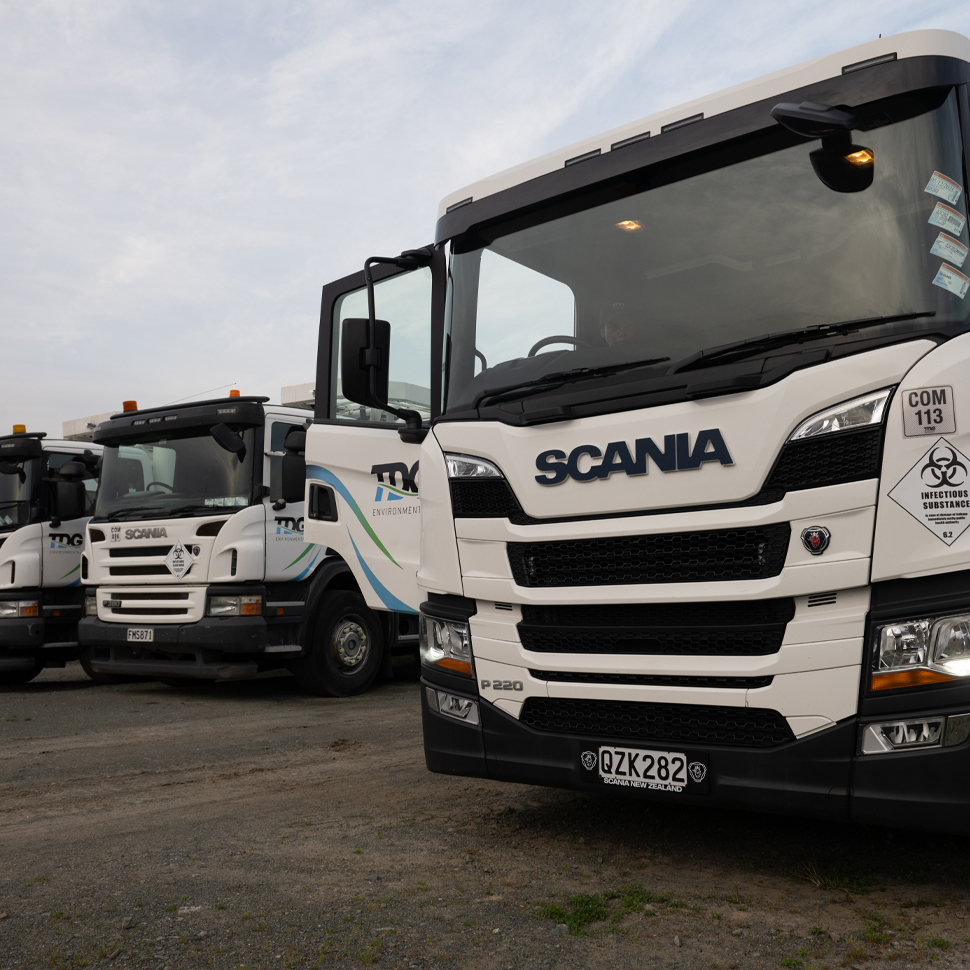
TDG deploys purpose-built equipment matched to each site's unique challenges. Our spider excavators operate on steep slopes and in water up to 2 metres deep, accessing locations impossible for conventional machinery. Remote-controlled equipment keeps operators safe while working in confined culverts, deep channels, and hazardous environments. Our grab trucks, equipped with extendable boom arms reaching up to 19 metres, efficiently remove debris and vegetation from difficult access points.
High-capacity excavators and dredging equipment remove accumulated sediment, restoring full waterway capacity. Our Green Climber remote-controlled mulcher handles vegetation on slopes up to 60 degrees, processing overgrowth in place and eliminating transport requirements. Amphibious excavators work directly in water, removing sediment without dewatering or dam construction. Material is carefully extracted to prevent downstream impacts and environmental damage.
Removed material is loaded directly into grab trucks or placed in designated staging areas. Our decanting systems separate free water on-site, reducing disposal volumes and costs. Clean material suitable for reuse is processed through our Mainstream Recycling facilities, achieving up to 98% diversion from landfill. Sites are left clean, stable, and fully functional, with before-and-after documentation provided through our UtilityTrack system.
All works comply with Resource Management Act 1991 requirements and regional council regulations. We implement erosion and sediment control measures, manage water quality during operations, and protect sensitive habitats. Waste is transported in licensed vehicles to approved disposal facilities, with full documentation and tracking.
Three Decades of Environmental Services Excellence
With 30+ years of proven industry experience, TDG Environmental has completed thousands of waterway cleaning projects across New Zealand’s North Island. Our team understands the unique challenges of New Zealand waterways, from steep terrain and heavy rainfall to sensitive ecological values. This deep expertise ensures efficient, compliant, and environmentally responsible service delivery every time.
Specialised Amphibious and Remote Equipment
TDG’s spider excavators represent the pinnacle of waterway maintenance technology. These amphibious machines operate in water up to 2 metres deep, cross terrain steeper than people can walk, and fit under ceilings as low as 3 metres. With lifting capacity of 5.5 tonnes and operating reach of 8.5 metres, they access locations completely impossible for conventional equipment. Remote control operation eliminates operator risk in hazardous environments.
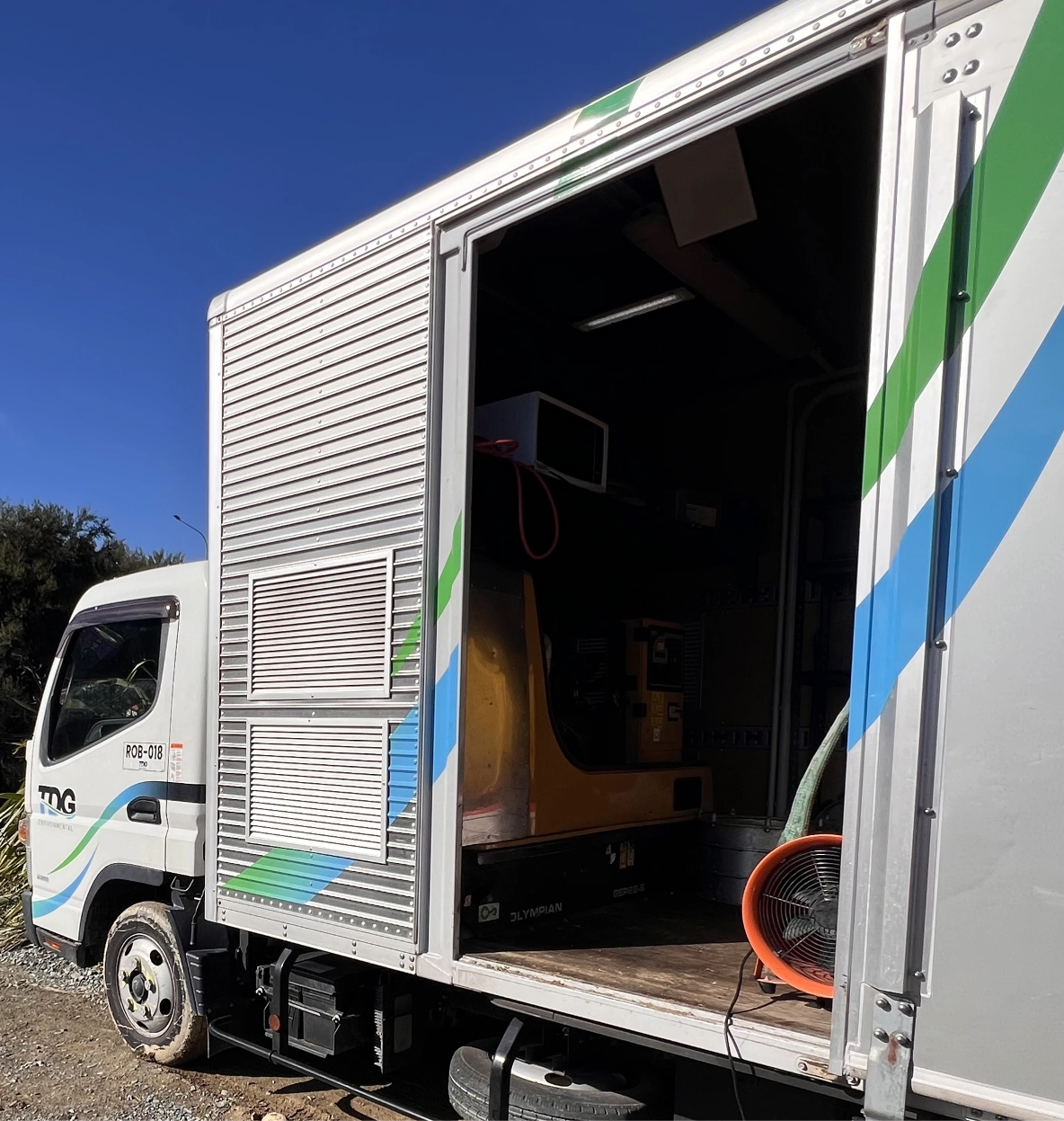
Our Remote Operated Dredge (ROD) enables continuous removal of sludges, biosolids, and sediment from live treatment plant lagoons, ponds, and dams. Operators work safely from shore while the dredge removes settled solids and floating materials without impacting plant performance. This capability is critical for maintaining operational water treatment facilities.
Comprehensive Equipment Fleet
Beyond our flagship spider excavators, TDG maintains a diverse fleet purpose-built for waterway maintenance. Our grab trucks feature extendable clamshell booms reaching 19 metres, ideal for removing debris from open channels and lifting heavy pit lids. The Green Climber remote mulcher handles steep-slope vegetation management with unprecedented safety and efficiency. Posi-track loaders, excavators, and support equipment ensure we have the right tool for every waterway challenge.
Environmental Commitment and Recycling Innovation
TDG’s Mainstream Recycling facilities process waterway waste to achieve up to 98% beneficial reuse. Sediment and vegetation are separated, treated, and repurposed as landscaping products, dramatically reducing landfill burden. This circular economy approach aligns environmental responsibility with cost efficiency. Our ISO 9001, 14001, and 45001 certifications demonstrate systematic commitment to quality, environmental management, and safety.
Real-Time Project Transparency
Our UtilityTrack web-based GIS portal provides unprecedented project visibility. Clients access real-time photos, production statistics, GPS locations, and before-and-after documentation from any device. This transparency eliminates uncertainty, enables informed decision-making, and provides comprehensive records for compliance and asset management purposes.
TDG cleans drainage channels, streams, retention ponds, stormwater wetlands, treatment plant lagoons, culverts, swales, and detention basins. Our equipment handles both urban and rural waterways, from small residential channels to major trunk drainage systems. We work in live water treatment facilities, environmentally sensitive areas, and challenging terrain including steep slopes and deep water.
Our spider excavators operate on slopes up to 60 degrees, work in water up to 2 metres deep, and navigate terrain impossible for conventional machinery. Remote control operation allows work in confined culverts and hazardous environments without exposing operators to risk. Grab trucks with 19-metre extendable booms reach over fences and vegetation to access restricted areas. This specialised equipment eliminates the need for extensive access construction or dewatering.
Material is transported to TDG’s Mainstream Recycling facilities where it undergoes separation, treatment, and processing. Up to 98% is beneficially reused as landscaping products including sand, organic soils, and aggregates. This diverts waste from landfill while supporting circular economy principles. All transport uses licensed vehicles and disposal occurs only at approved facilities with full documentation.
Yes. Our Remote Operated Dredge (ROD) removes sediment from live treatment plant lagoons without impacting operations or requiring downtime. We implement careful staging, erosion control, and water quality management to maintain flow in operational drainage systems. Work schedules are coordinated with operational requirements to minimise service disruption while ensuring thorough cleaning.
Waterway cleaning typically requires resource consent under the Resource Management Act 1991, particularly for works in natural watercourses or within riparian zones. Regional councils regulate sediment discharge, vegetation disturbance, and works in water. TDG assists clients with consent applications, implements required environmental controls, and ensures full compliance with consent conditions and regional plans.
Cleaning frequency depends on catchment characteristics, sediment load, vegetation growth rates, and operational requirements. Stormwater retention ponds typically require annual or biennial maintenance. Treatment plant lagoons may need cleaning every 3-5 years. Drainage channels benefit from regular inspection with cleaning scheduled based on sediment accumulation and vegetation density. TDG provides condition assessment and maintenance scheduling recommendations tailored to each system.
Yes. TDG implements stringent environmental protection measures including erosion and sediment control, water quality monitoring, habitat protection, and timing restrictions. We work closely with regional councils, iwi, and environmental specialists to develop appropriate methodologies. Our remote-controlled equipment minimises ground disturbance and environmental footprint compared to conventional machinery.
Spider excavators access locations completely impossible for conventional machinery. They work safely on slopes steeper than people can walk, operate in 2 metres of water, fit under low bridges, and navigate confined spaces. Tracks distribute weight to minimise ground pressure and disturbance. Remote control eliminates operator exposure to hazards. The combination of access capability, environmental sensitivity, and operator safety makes spider excavators revolutionary for waterway maintenance.
Yes. TDG offers 24/7 emergency response for urgent waterway blockages threatening flooding, infrastructure damage, or operational disruption. Our rapid deployment capability and specialised equipment resolve emergencies quickly, minimising damage and restoring function. Emergency services are available across the North Island with response times tailored to urgency and location.
TDG’s UtilityTrack system captures GPS locations, before-and-after photos, sediment volumes, waste types, and equipment used. Clients access this data in real-time through a web-based portal. Final documentation includes comprehensive photographic records, disposal dockets, waste tracking, and compliance evidence. This thorough documentation supports asset management, consent compliance, and maintenance planning.
TDG Environmental’s hydro excavation services operate throughout New Zealand’s North Island, providing safe non-destructive digging solutions to urban and rural communities.
Auckland: Central Auckland, North Shore, Waitākere, Manukau, Papakura, Franklin, Rodney, Hibiscus Coast, Pukekohe
Waikato: Hamilton, Cambridge, Te Awamutu, Matamata, Tokoroa, Taupō, Thames-Coromandel, Hauraki, Waikato District
Bay of Plenty: Tauranga, Rotorua, Whakatāne, Kawerau, Western Bay of Plenty, Ōpōtiki
Hawke’s Bay: Napier, Hastings, Wairoa, Central Hawke’s Bay
Taranaki: New Plymouth, Stratford, South Taranaki, Inglewood, Waitara
Manawatū-Whanganui: Palmerston North, Whanganui, Tararua, Horowhenua, Manawatū, Rangitīkei, Ruapehu
Wellington: Wellington City, Lower Hutt, Upper Hutt, Porirua, Kāpiti Coast, Wairarapa, Masterton, Carterton, South Wairarapa
Our strategically positioned fleet and experienced regional teams ensure rapid response times and consistent service quality across all North Island locations.

The TDG team is on call when you need immediate support. Get in touch.
TDG Environmental is the most experienced provider of sustainable waste and stormwater management solutions throughout New Zealand and Australia specialising in a comprehensive range of environmental services including:
Error: Contact form not found.
Australia 1300 330 294