Professional septic tank cleaning and pump out services for residential, commercial, and industrial properties. TDG Environmental delivers fast, compliant septic waste removal to prevent system failures and protect your property investment.
Neglected septic tanks create serious health, environmental, and financial risks. Without professional maintenance, minor issues escalate into expensive emergencies that threaten your property and community safety.
Overdue Maintenance Leading to System Failures
Septic tanks require pumping every 3 years to function properly. Neglecting this schedule causes solid waste buildup that blocks pipes, creates sewage backups, and forces wastewater into your property. System failures require emergency repairs costing thousands of dollars, plus potential property damage from sewage contamination.
Corrosive Buildup Damaging Tank Integrity
Blocked Drain Fields and Burst Pipes
Excess sludge levels force untreated wastewater into drain fields prematurely, clogging soil percolation systems and preventing proper effluent dispersal. This causes sewage to back up into your property, creating unsanitary conditions and environmental violations. Blocked pipes can burst under pressure, flooding your property with raw sewage and requiring costly excavation, pipe replacement, and drain field restoration.
Our service begins with a thorough inspection of your septic tank and connected infrastructure. We assess tank condition, measure sludge and scum levels to determine pumping requirements, and inspect pipes and structures for damage or blockages. This detailed evaluation identifies potential issues before they become costly failures, ensuring your system receives appropriate maintenance.
We verify drain field functionality to ensure proper effluent percolation into surrounding soil. Early detection of drain field problems prevents environmental contamination and expensive excavation work. Our inspection documentation provides a complete record of your system's condition and maintenance history.
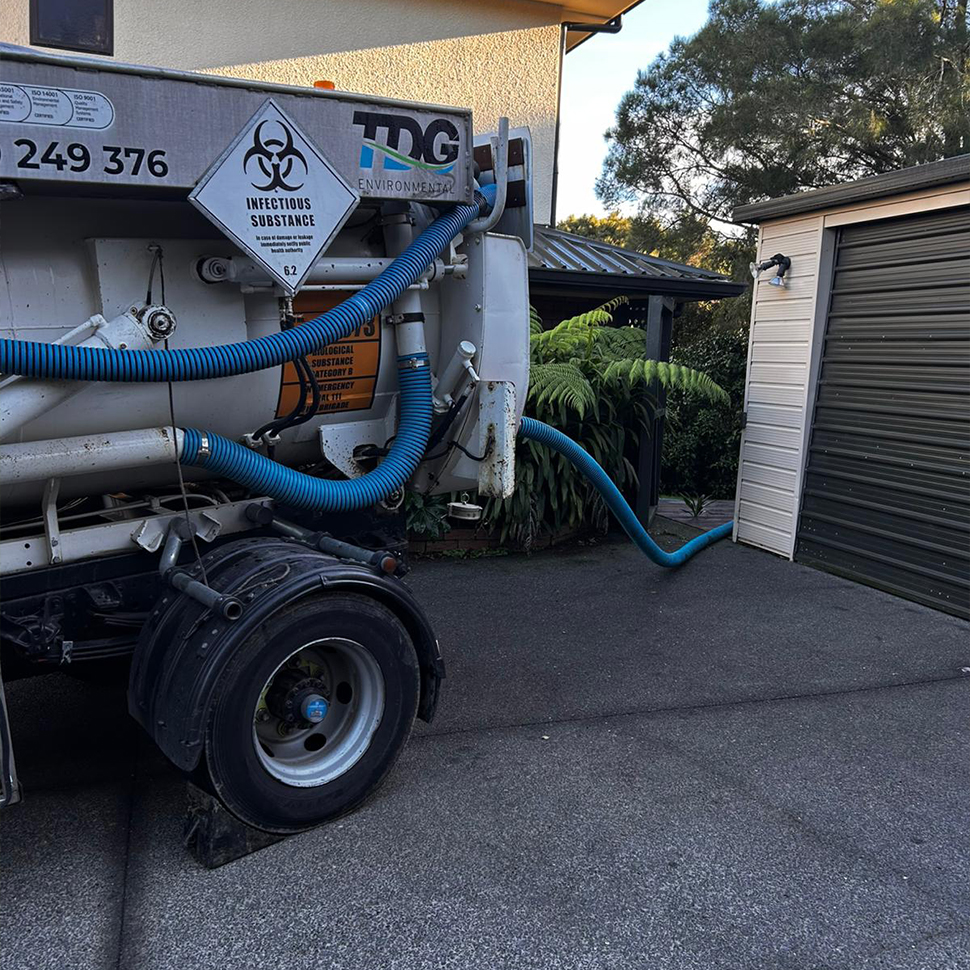
Using specialised vacuum equipment, we efficiently extract all liquid waste, sludge, and sewage materials from your septic tank. Our high-capacity vacuum trucks handle residential and commercial systems of all sizes, ensuring complete waste removal that restores your tank's treatment capacity.
During extraction, we monitor the process to identify any unusual conditions that may indicate system problems. Our experienced operators handle the entire process safely, protecting your property from contamination and ensuring efficient service completion. We take care to preserve tank integrity and connected infrastructure during the pumping process.
All septic waste is transported directly to approved treatment facilities compliant with regional council requirements for proper disposal. Our fleet ensures environmental compliance throughout the handling and disposal process, protecting waterways, soil, and public health. We maintain detailed disposal records that document proper waste management.
After pumping, we verify your system's operational status and provide recommendations for ongoing maintenance. Our technicians explain any concerns identified during service and suggest preventive measures to extend system lifespan. You receive clear documentation of the service performed and guidance on your next scheduled maintenance.
A septic tank is an underground wastewater treatment facility essential for properties not connected to municipal sewer systems—common throughout regional New Zealand. The tank uses biological decomposition to break down organic matter naturally without chemicals, providing an environmentally sustainable waste management solution.
Professional inspections measure sludge accumulation, identify structural issues, and verify drain field performance. Industry best practice recommends annual inspections for all septic systems, allowing early detection of problems before they require expensive repairs.
Most residential septic tanks require pumping every three years, though household size, water usage, and tank capacity affect this frequency. Commercial and industrial systems may require more frequent service depending on usage levels and waste characteristics. Annual inspections establish your specific pumping schedule based on actual sludge accumulation rates rather than generic estimates.
Never flush sanitary products, disposable nappies, or wipes—even those marketed as “biodegradable” or “flushable.” These materials do not break down in septic systems and cause blockages requiring emergency service. Only toilet paper and human waste should enter your septic system.
Avoid disposing of cooking oils, grease, coffee grounds, cat litter, medications, harsh chemicals, or paint products down drains. These substances disrupt bacterial digestion processes, damage tank components, and contaminate groundwater. Proper waste disposal protects your investment and prevents environmental harm.
Slow drains, gurgling pipes, sewage odours, or wet areas above the drain field indicate potential system problems. Toilets that are slow to flush or sewage backing up into fixtures require immediate professional attention. Standing water or unusually lush grass growth over the drain field suggests system failure.
Early professional intervention prevents minor issues from becoming major failures. Don’t wait for complete system breakdown to schedule service. Regular maintenance and prompt response to warning signs protect your property investment and avoid emergency repair costs.
Full Regulatory Compliance
Our entire fleet operates to ensure environmentally responsible waste handling and disposal. We adhere strictly to New Zealand environmental regulations, including the Resource Management Act 1991, Waste Minimisation Act 2008, and regional council requirements. Our regulatory compliance protects you from liability while ensuring proper waste management that safeguards natural resources.
Every vehicle in our fleet is purpose-built and certified for liquid waste transport. Our operators hold current qualifications and maintain ongoing training in safe handling procedures, environmental protection, and emergency response protocols.
24/7 Emergency Response Availability
Septic failures don’t wait for business hours. Our 24/7 emergency service ensures rapid response when system backups or failures threaten your property. We understand the urgency of septic emergencies and prioritise immediate dispatch to minimise property damage, health risks, and business disruption.
Most residential septic tanks require pumping every 3 years to maintain proper function. However, household size, water usage patterns, and tank capacity significantly affect this frequency. Larger households or smaller tanks may need annual or biennial pumping. Annual professional inspections measure actual sludge accumulation, establishing your specific pumping schedule based on usage rather than estimates.
Neglected septic tanks fill with solid waste that blocks pipes and causes sewage to back up into your property. Excess sludge damages tank components, clogs drain fields, and may contaminate groundwater with untreated sewage. Failed systems require emergency repairs costing £5,000-£15,000 or complete replacement costing £15,000-£30,000. Preventive maintenance costs a fraction of emergency repairs while protecting property value and environmental compliance.
Septic tank pumping requires specialised vacuum equipment, appropriate waste transport approvals, and approved disposal facilities. DIY attempts risk personal injury from toxic gases, property damage from improper handling, environmental violations, and incomplete waste removal that leaves your system vulnerable to failure. Professional service ensures complete waste extraction, proper disposal, and system verification that DIY methods cannot achieve.
Professional inspections measure sludge levels accurately using specialised tools. Warning signs include slow drains throughout your property, sewage odours inside or outside, gurgling sounds from pipes, toilet backups, or standing water near the drain field. However, don’t wait for these symptoms—maintain a regular 3-year pumping schedule established through annual inspections to prevent problems before they occur.
Avoid flushing sanitary products, nappies, wipes (including “flushable” varieties), cat litter, coffee grounds, cigarette butts, or any non-biodegradable materials. Never dispose of cooking oils, grease, harsh chemicals, medications, paint, or solvents down drains. These materials disrupt biological decomposition, cause blockages, damage tank components, and contaminate groundwater. Only toilet paper and human waste should enter your septic system.
Most residential septic tank pump outs take 1-2 hours, including system inspection, waste extraction, and operation verification. Larger commercial or industrial systems may require 2-4 hours depending on tank size and waste volume. Access difficulties or multiple tank systems extend service time. We provide accurate time estimates when scheduling your service based on your specific system requirements.
Septic additives claiming to reduce pumping requirements are unnecessary and potentially harmful. Healthy septic systems contain naturally occurring bacteria that effectively break down waste without chemical intervention. Many additives disrupt bacterial balance, damage drain fields, or provide no benefit while costing money. Regular pumping every 3 years remains the only proven method for maintaining system health and preventing failures.
Municipal sewer systems transport wastewater through underground pipes to centralised treatment plants serving entire communities. Septic tanks are individual on-site treatment systems serving single properties not connected to municipal sewers. Septic systems require regular maintenance including pumping every 3 years, while sewer connections require no homeowner maintenance beyond preventing pipe blockages.
Regular pumping every 3 years, annual inspections, water conservation, and proper waste disposal significantly extend system lifespan. Avoid excessive water use that overwhelms treatment capacity. Repair leaking fixtures promptly. Never drive vehicles over the drain field or plant trees near the system. Divert roof drainage and surface water away from the drain field. Properly maintained systems last 25-30 years or longer.
Immediately stop water use to prevent additional sewage backup. Contact TDG Environmental’s 24/7 emergency service on 0800 249 736 for rapid response. Do not attempt to use plumbing fixtures until the system is professionally serviced. Keep family members and pets away from affected areas due to health risks. Document damage for insurance purposes if sewage has entered living spaces.
TDG Environmental’s hydro excavation services operate throughout New Zealand’s North Island, providing safe non-destructive digging solutions to urban and rural communities.
Auckland: Central Auckland, North Shore, Waitākere, Manukau, Papakura, Franklin, Rodney, Hibiscus Coast, Pukekohe
Waikato: Hamilton, Cambridge, Te Awamutu, Matamata, Tokoroa, Taupō, Thames-Coromandel, Hauraki, Waikato District
Bay of Plenty: Tauranga, Rotorua, Whakatāne, Kawerau, Western Bay of Plenty, Ōpōtiki
Hawke’s Bay: Napier, Hastings, Wairoa, Central Hawke’s Bay
Taranaki: New Plymouth, Stratford, South Taranaki, Inglewood, Waitara
Manawatū-Whanganui: Palmerston North, Whanganui, Tararua, Horowhenua, Manawatū, Rangitīkei, Ruapehu
Wellington: Wellington City, Lower Hutt, Upper Hutt, Porirua, Kāpiti Coast, Wairarapa, Masterton, Carterton, South Wairarapa
Our strategically positioned fleet and experienced regional teams ensure rapid response times and consistent service quality across all North Island locations.

The TDG team is on call when you need immediate support. Get in touch.
TDG Environmental is the most experienced provider of sustainable waste and stormwater management solutions throughout New Zealand and Australia specialising in a comprehensive range of environmental services including:
Error: Contact form not found.
Australia 1300 330 294